↓ Skip to main content

Bufon · IAM & Cloud Security Engineering

Security-driven automation, whatever it runs on.

Since 2009 I’ve built and secured infrastructure across identity, cloud, Windows and Linux. The platform changes, the job doesn’t: make it secure by default and put it in code.

Identity · Cloud · Platform · Linux · DevSecOps · Windows · Network

bufon.nl, aka The Nark: a crown and shield surrounded by identity, cloud, platform, Linux, DevSecOps, Windows and network

Recent

Automate my posts on bufon.nl

Automate my posts on bufon.nl

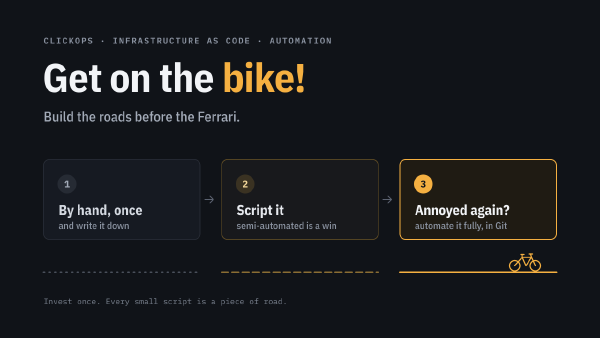
Let me be clear: I’m not lazy. I’m really lazy. There’s a difference. A lazy person skips the work. A really lazy person spends a whole Saturday building a machine so they never have to do that work again. It suits the name. Bufon means jester, and the jester was the one person at court who never carried anything. He juggled, told the king the truth and let the servants do the rest. My servants are a GitHub workflow and a cron job. They don’t get paid either. In Get on the bike! I wrote that you should do something by hand once, script it the second time and automate it when it annoys you again. Publishing posts had reached step three.
Why Bufon?

Why Bufon?

·1 min
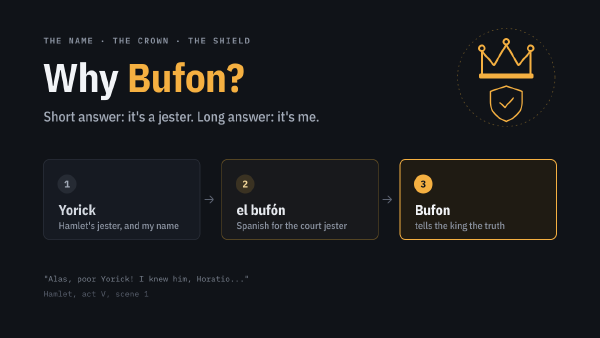
People sometimes ask where the name Bufon comes from. Short answer: it’s a jester. The fool # In Spanish (and a few other languages), bufón means jester, the court fool. Historically the jester was the one person allowed to tell the king uncomfortable truths without losing his head. Pointing out that the emperor’s firewall has no clothes felt like a fitting job description for someone working in security.
Get on the bike! Why ClickOps teams keep running beside their bike

Get on the bike! Why ClickOps teams keep running beside their bike

You probably know a team like this. Servers get built by hand. Settings get clicked through one machine at a time. Changes on critical systems are done in an RDP session, and GPOs, templates and Ansible are nowhere to be seen. Every server is a little different, and only the person who built it knows why. It’s ClickOps, and it’s still everywhere, especially in teams that have “always done it this way.” To me it looks like a team running beside their bike, sweating and out of breath, when they could just get on it.